Parkinson's disease: early symptoms, diagnosis and treatment
Parkinson's disease is a slowly progressive condition of the nervous system that mainly affects movement, but also sleep, mood and digestion. It cannot yet be cured, but modern treatment allows most people to stay active for many years.

What is Parkinson's disease?
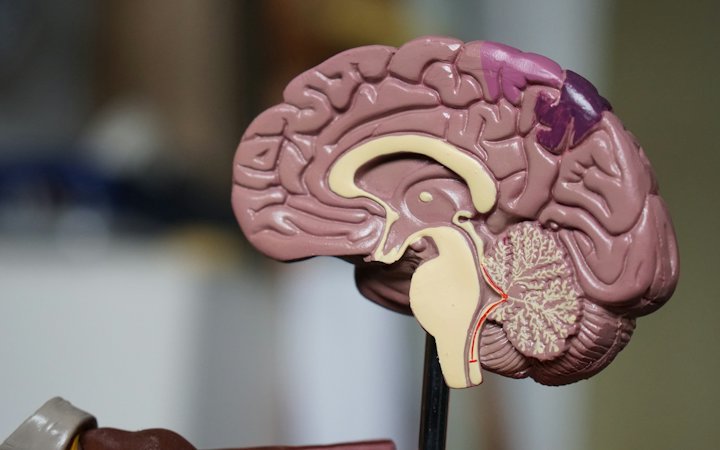
In Parkinson's disease, nerve cells in an area of the brain called the substantia nigra gradually die. These cells produce dopamine, a chemical messenger needed for smooth, coordinated movement. When dopamine levels fall far enough, the typical movement symptoms appear.
The condition usually starts after the age of 60, although some people develop it earlier. According to the World Health Organization, the number of people living with Parkinson's worldwide has roughly doubled over recent decades, partly because populations are ageing. The exact cause is unknown; a combination of age, genetic and environmental factors is thought to be involved. Parkinson's belongs to the wider group of neurological diseases.
Symptoms of Parkinson's
Main movement (motor) symptoms:
- Tremor at rest – shaking, usually of one hand, that eases with movement. Not everyone with Parkinson's has a tremor.
- Bradykinesia – slowness of movement, shorter and slower steps, difficulty with buttons or fine tasks.
- Rigidity – stiff muscles, sometimes with shoulder or neck pain.
- Poor balance when standing and walking – usually in later stages, with a risk of falls.
Non-motor symptoms sometimes appear years before the tremor: a reduced sense of smell, constipation, sleep problems (including acting out dreams), depression and anxiety, tiredness and, later, memory difficulties. A quieter voice, smaller handwriting and a less expressive face are also typical.
Symptoms usually begin on one side of the body and develop gradually over years.
How Parkinson's is diagnosed
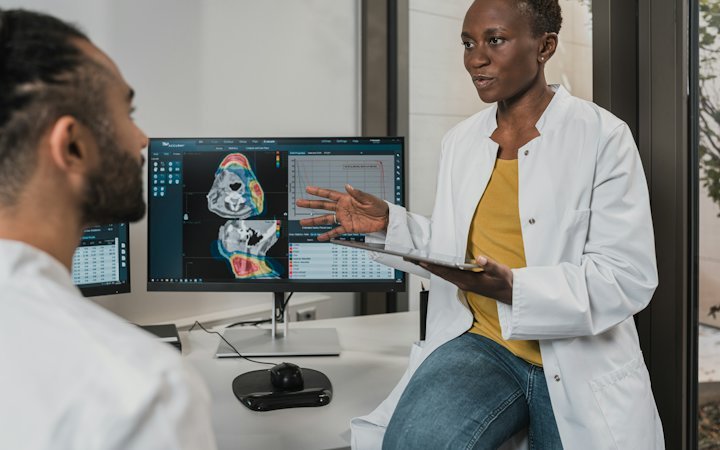
There is no single blood test or scan that proves Parkinson's disease. A neurologist makes the diagnosis from your history and examination, using the international criteria of the Movement Disorder Society.
Tests help exclude other conditions:
- Brain MRI – to rule out vascular changes, tumours or other causes;
- DaT scan – an imaging test showing reduced dopamine activity, used when the diagnosis is uncertain;
- blood tests and a review of medicines – some drugs can cause Parkinson-like symptoms.
It is important to distinguish Parkinson's from essential tremor and from so-called atypical parkinsonian syndromes, which behave differently and need different care. A clear response to levodopa also supports the diagnosis. If in doubt, a second opinion from a movement disorders specialist is sensible.
Treatment with medicines
The aim of treatment is to relieve symptoms and preserve independence. The choice of medicines and doses is made by the neurologist and changes over time. The main groups are:
- levodopa (combined with a substance that reduces side effects) – the most effective option for motor symptoms;
- dopamine agonists – which mimic dopamine;
- MAO-B and COMT inhibitors – which prolong the effect of dopamine or levodopa;
- medicines for non-motor symptoms such as depression, constipation and sleep problems.
After some years, many people develop motor fluctuations – the medicine wears off before the next dose – and involuntary movements (dyskinesias). The treatment plan is then adjusted. Taking medicines at the right times matters, and they should never be stopped suddenly without medical advice.
Deep brain stimulation and other options
In advanced disease, when tablets no longer give steady control, the following may be considered for carefully selected patients:
- Deep brain stimulation (DBS) – a neurosurgical operation in which fine electrodes are placed in specific deep brain structures and connected to a programmable stimulator under the skin. It can reduce fluctuations, tremor and dyskinesias, but it does not stop the disease from progressing.
- Infusion therapies – continuous delivery of medicine by pump, into the gut or under the skin.
- Focused ultrasound – offered in some centres for selected patients with severe tremor.
Not everyone is suitable. The decision is made by a neurologist and neurosurgeon working together after detailed assessment, including memory testing and the response to levodopa.
Rehabilitation and daily life
Regular exercise is one of the most important parts of treatment. Physiotherapy, walking, cycling, dancing and balance training improve mobility and reduce the risk of falls – see physical activity.
- speech and language therapy for a soft voice and swallowing problems;
- occupational therapy to adapt the home and daily tasks;
- a balanced diet with plenty of fluids and fibre to prevent constipation;
- attention to sleep and mood – depression is common and treatable.
To lower the risk of falls, remove loose rugs, keep good lighting at night and fit grab rails in the bathroom. Many people keep working and driving for years after diagnosis, but this should be discussed with the neurologist, especially if daytime sleepiness or slower reactions appear. Support from family and patient organisations is invaluable, particularly in later stages when caring becomes more demanding for those close to the patient.
When to see a doctor
See your GP and ask for a neurology referral if you notice a persistent tremor of one hand at rest, slower movements, a change in walking, smaller handwriting, a quieter voice or stiffness, particularly on one side. Early assessment allows an accurate diagnosis and timely treatment.
If you are already being treated, contact your doctor if symptoms worsen, you fall often, you experience hallucinations or sudden confusion, swallowing becomes difficult, or your medicines wear off sooner. Sudden weakness on one side or slurred speech may be a stroke – call 112 immediately (see stroke).
Treatment abroad / in Türkiye
Some people with Parkinson's from Bulgaria and across Europe consult movement-disorder centres abroad, most often to confirm the diagnosis, fine-tune treatment or be assessed for deep brain stimulation. Large accredited hospital groups in Istanbul have neurology and neurosurgery teams experienced in DBS.
Before deciding, check the centre's DBS experience, the neurologist's and neurosurgeon's specialty, the written plan of tests, and – crucially – who will programme the stimulator once you are back home, as this matters for long-term results. New City Clinic in Istanbul is a health-tourism organiser that coordinates hospital, doctor, hotel, transfers and interpreter; treatment decisions are made by the doctors.
Frequently asked questions
Is Parkinson's disease inherited?
For most people it is not directly inherited. A small proportion of cases are linked to specific gene changes, especially when the disease starts young. Having a relative with Parkinson's slightly raises the risk but does not mean you will develop it.
Is every tremor a sign of Parkinson's?
No. The most common cause of shaking hands is essential tremor, which appears during action, such as holding a cup. Tremor can also be caused by the thyroid, medicines, caffeine or anxiety. A neurologist can find the cause.
Can Parkinson's be cured?
There is currently no treatment that stops or reverses the disease. Modern medicines, rehabilitation and, where appropriate, deep brain stimulation can however greatly improve symptoms and quality of life.
Who is suitable for deep brain stimulation?
Usually people with confirmed Parkinson's who respond well to levodopa but have troublesome fluctuations or dyskinesias, and who do not have significant memory problems. A specialist team decides after detailed tests.
Sources
This article is for education and does not replace consultation, diagnosis or treatment by a doctor. In an emergency call 112.