Breast cancer stages: understanding TNM, grade and subtype
After a breast cancer diagnosis, one of the first questions is usually "What stage is it?". The stage describes how large the tumour is and how far it has spread and, together with the biological subtype, helps doctors choose the most suitable treatment. Here is how to make sense of the terms in your report.

Why staging matters
The stage of breast cancer describes how advanced it is at diagnosis. It helps the cancer team decide whether to start with surgery or drug treatment, whether radiotherapy and chemotherapy are needed, and gives a general guide to outlook.
Stage is only part of the picture, though. Two tumours of the same stage can behave differently depending on their biology. That is why the current classification (the 8th edition of the AJCC system) combines the anatomical stage with prognostic biological markers – grade, hormone receptors and HER2.
The TNM system in brief
- T (tumour) – the size of the primary tumour and whether it involves the skin or chest wall. Tis is carcinoma in situ; T1 is up to 2 cm; T2 is over 2 cm and up to 5 cm; T3 is over 5 cm; T4 is a tumour of any size affecting the skin or chest wall, including inflammatory breast cancer.
- N (nodes) – whether, and how many, regional lymph nodes are involved (armpit, beside the breastbone, above and below the collarbone). N0 means none; N1–N3 indicate increasing numbers or more distant node groups.
- M (metastasis) – M0 means no distant spread has been found; M1 means the cancer has reached distant organs.
You may also see a small letter in front: c (clinical stage, based on examination and imaging), p (pathological stage, after surgery) or yp (pathological stage after treatment given before surgery).
Stages 0 to IV
| Stage | What it means | Typical approach (general guide) |
|---|---|---|
| 0 | Carcinoma in situ (DCIS) – abnormal cells confined to the milk duct | Breast-conserving surgery with or without radiotherapy, or mastectomy; sometimes hormone therapy |
| I | Tumour up to 2 cm, no nodes or only microscopic node involvement | Surgery; radiotherapy after breast-conserving surgery; drug treatment according to subtype |
| II | Tumour 2–5 cm and/or 1–3 armpit nodes involved; or tumour over 5 cm without nodes | Surgery plus drug treatment; for HER2-positive and triple-negative, often drugs first |
| III | Locally advanced – large tumour, skin or chest wall involvement, or many nodes | Usually systemic treatment first, then surgery and radiotherapy |
| IV | Metastatic – spread to bones, lungs, liver, brain or distant nodes | Systemic drug treatment aiming for long-term control and quality of life |
Stages II and III are further divided (IIA, IIB, IIIA, IIIB, IIIC) according to the exact combination of T and N. The table is simplified – your oncologist determines the precise stage.
Tumour subtype: why it matters so much
From the tissue taken at breast biopsy, the pathologist reports features that often influence treatment more than tumour size:
- Hormone receptors (ER, PR) – if positive, the cancer is driven by hormones and can be treated with hormone therapy.
- HER2 – over-expression makes a tumour more aggressive, but there are very effective anti-HER2 drugs. The "HER2-low" category is increasingly relevant in advanced disease.
- Grade (1–3) – how different from normal the cells look.
- Ki-67 – how quickly cells are dividing.
These features define luminal A, luminal B, HER2-positive and triple-negative breast cancer. A small triple-negative or HER2-positive tumour, for example, may need chemotherapy, while a larger, slow-growing hormone-sensitive tumour is sometimes treated without it. For some hormone-sensitive cancers, genomic tests (multigene assays) help estimate the risk of recurrence.
Tests used to work out the stage
- Clinical examination of the breasts and lymph nodes.
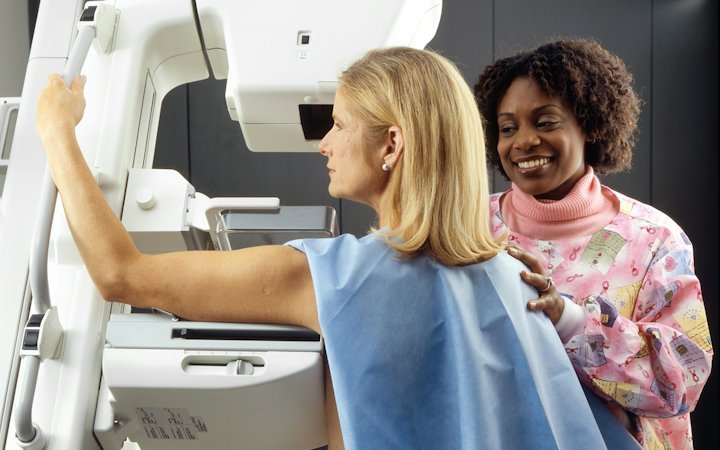
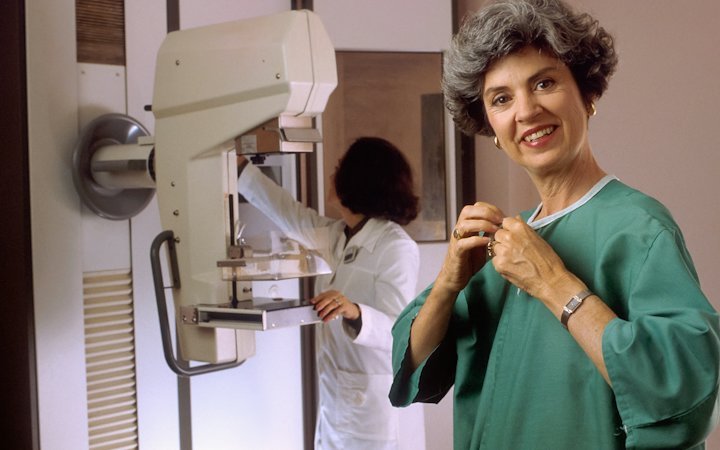
- Mammogram and ultrasound of both breasts and armpits; breast MRI in selected cases (for example lobular cancer, dense breasts, inherited risk, or before treatment given ahead of surgery).
- Biopsy of the tumour and, if suspicious, of a lymph node.
- Scans for distant spread – not routine for small tumours without symptoms. They are recommended for larger tumours, node involvement, aggressive subtypes or symptoms: CT of the chest and abdomen, a bone scan or PET-CT.
- Blood tests – general health, liver and kidney function. Tumour markers are not used to stage breast cancer – see tumour markers.
- Genetic counselling – for younger patients, triple-negative cancer or a strong family history.
The final (pathological) stage is often confirmed only after surgery, once the whole tumour and removed lymph nodes have been examined.
Stage and outlook
In general, the earlier the stage, the better the outlook. When cancer is confined to the breast, survival in well-resourced health systems is very high; when regional lymph nodes are involved it is lower, but most people are still treated successfully. Stage IV can rarely be cured completely, but modern treatment increasingly allows years of life with good quality.
Statistics describe large groups of people and cannot predict what will happen to an individual. They also reflect treatments given several years ago, and therapies keep improving. If you want to talk about your own outlook, ask your oncologist, who can take all your personal factors into account.
How stage guides treatment
For early cancer (stage 0–I and some stage II), treatment usually starts with surgery – breast-conserving or mastectomy – followed by radiotherapy and/or drug treatment. See breast cancer surgery and mastectomy.
For larger tumours, involved nodes, or HER2-positive and triple-negative subtypes, neoadjuvant (pre-operative) treatment is often given first. It can shrink the tumour, allow smaller surgery and show how well the cancer responds to drugs. If no active cancer remains afterwards (a pathological complete response), this is generally a favourable sign.
In stage IV, the foundation is systemic treatment – hormone therapy, targeted drugs, chemotherapy and, in selected cases, immunotherapy – with surgery and radiotherapy used selectively. The general principles are covered in modern cancer treatment.
When to see a doctor – and getting a second opinion
If you have been diagnosed, ask for copies of your pathology report and imaging reports, and ask your doctor to explain your stage and subtype in plain language. Contact your team promptly about new symptoms such as bone pain, breathlessness, persistent headaches or yellowing of the skin.
Treatment decisions should be made by a multidisciplinary team. In a complex case, with conflicting results or if you feel unsure, it is entirely reasonable to ask for a second medical opinion – usually without significantly delaying the start of treatment.
Many patients from Bulgaria and across Europe seek a second opinion or treatment at large accredited hospital groups in Istanbul. If you are considering this, send your full records in advance, check the hospital's accreditation and the oncologist's and surgeon's specialties, ask for a written treatment plan, and agree how follow-up and ongoing drug treatment will continue at home. Organisers such as New City Clinic coordinate the hospital, doctor, hotel, transfers and interpreter.
Frequently asked questions
Which stage is the most serious?
Stage IV (metastatic) is the most advanced, because the cancer has spread to distant organs. Even then, modern treatment can often control the disease for a long time. The outlook also depends on tumour subtype, not stage alone.
Can my stage change after surgery?
Yes. The first clinical stage is based on examination and imaging. After surgery the pathologist examines the whole tumour and lymph nodes and gives a pathological stage, which can be lower or higher.
What does triple-negative mean?
It describes a tumour without oestrogen or progesterone receptors and without HER2 over-expression. It does not respond to hormone or anti-HER2 therapy, so treatment is based on chemotherapy and, in suitable cases, immunotherapy.
Do I need a CT scan and bone scan?
Not always. For a small tumour without node involvement or symptoms, they are usually unnecessary. They are recommended for more advanced stages, aggressive subtypes or symptoms suggesting spread.
Is stage 0 really cancer?
Stage 0 (carcinoma in situ) is a non-invasive early form: the cells are abnormal but have not spread beyond the milk duct. It is not life-threatening in itself but is treated to stop it becoming invasive.
Sources
This article is for education and does not replace consultation, diagnosis or treatment by a doctor. In an emergency call 112.