Cancer care · Complete guide
Breast cancer: symptoms, diagnosis and modern treatment
Breast cancer is the most commonly diagnosed cancer in women worldwide. When it is found early, it can usually be treated successfully, and treatment is becoming steadily more precise and less invasive. This guide walks you through the essentials, from the first warning signs to life after treatment.
What is breast cancer?
Breast cancer is a malignant tumour that starts in the cells of the breast. Most cases begin in the lining of the milk ducts (ductal carcinoma) or in the milk-producing lobules (lobular carcinoma). When abnormal cells are still confined within a duct, the condition is called ductal carcinoma in situ (DCIS), a non-invasive form. Once the cells break through the duct wall into surrounding tissue, the cancer is invasive and can spread to the lymph nodes and beyond.
According to the World Health Organization, around 2.3 million women were diagnosed with breast cancer worldwide in 2022 and about 670,000 died from it. It is the leading cancer in women across Europe. Roughly 0.5–1% of cases occur in men, so any unusual breast change in a man deserves a check too.
Breast cancer is not one single disease but a family of subtypes that behave differently. That is why two people with "breast cancer" may receive very different treatment. For the broader principles of cancer care, see modern cancer treatment.
Risk factors
It is rarely possible to say exactly why one person develops breast cancer, but several factors are known to raise the risk:
- Age – risk rises steadily after 40–50, and most cases are diagnosed after the menopause.
- Family history – breast or ovarian cancer in close relatives, particularly at a young age.
- Inherited gene changes – BRCA1 and BRCA2 are the best known, alongside PALB2, TP53, CHEK2 and others. Genetic counselling is advised when a hereditary pattern is suspected.
- Hormonal factors – early periods, late menopause, having no children or a first child after 30, and long-term combined hormone replacement therapy.
- Dense breast tissue on a mammogram – both increases risk and makes tumours harder to see.
- Lifestyle – excess weight after the menopause, alcohol, low physical activity and smoking.
- Previous chest radiotherapy at a young age, for example for lymphoma.
Having a risk factor does not mean you will get breast cancer, and having none does not guarantee protection. Some risks can be lowered – read more in cancer prevention.
Symptoms you should not ignore
Early breast cancer often causes no symptoms at all and is picked up only on a screening mammogram. When symptoms do appear, the most common are:
- a new lump or thickening in the breast or armpit, usually painless;
- a change in the size or shape of a breast;
- dimpling or puckering of the skin, or a nipple that has turned inwards;
- skin that looks like orange peel, or redness and thickening;
- nipple discharge, especially if bloody and from one side only;
- a scaly, crusted or eczema-like nipple that does not heal.
Most breast lumps turn out to be benign – cysts or fibroadenomas – but every new change should be checked by a doctor. Our article on breast cancer symptoms covers this in detail.
Early detection and screening
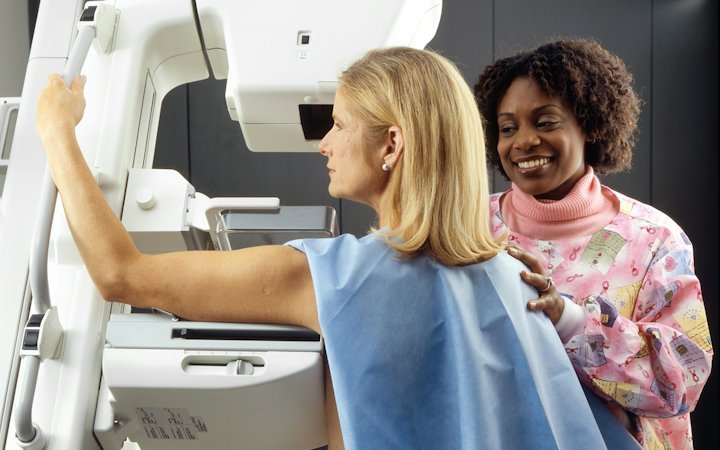
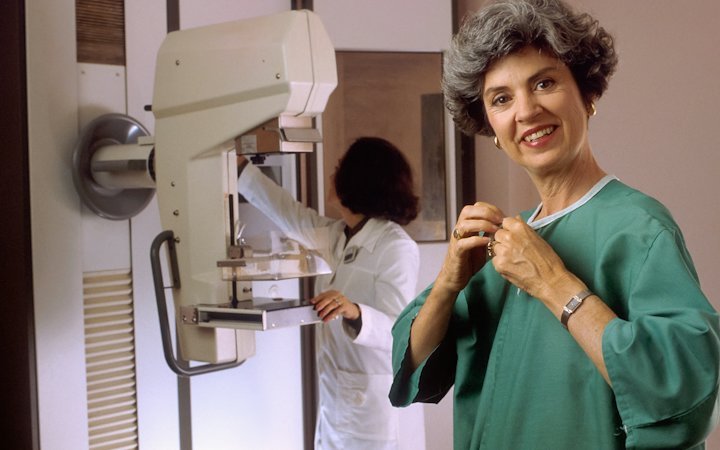
The main screening tool is mammography, a low-dose X-ray of the breasts. European guidelines recommend screening every two years for women aged 50 to 69, and many programmes now extend this to women aged 45 to 74. Women at high inherited risk usually start earlier and often have yearly breast MRI as well.
Breast ultrasound is often used for younger women, for dense breasts and to look more closely at a specific area. Screening finds many cancers before they can be felt, when treatment is usually simpler and more effective.
Learn more in mammography.
How breast cancer is diagnosed
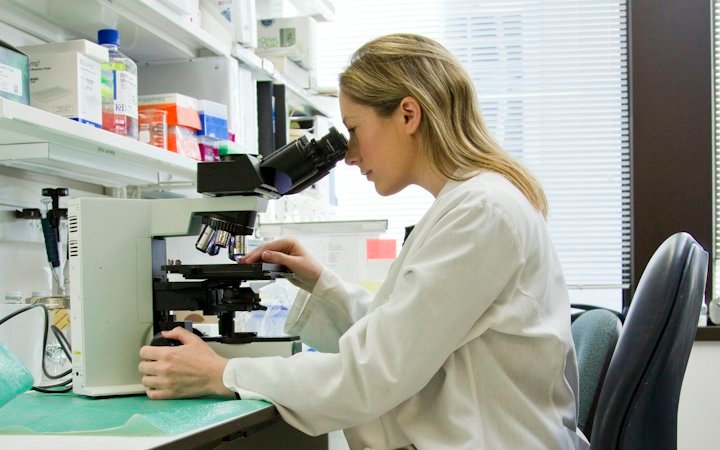
If something suspicious is found, doctors use what is often called "triple assessment": a clinical examination, imaging (mammogram and/or ultrasound, sometimes MRI) and a biopsy. Only examining tissue under the microscope can confirm or rule out cancer. A core needle biopsy guided by ultrasound or mammography is the most common method.
From the biopsy sample, the pathologist reports:
- the tumour type and grade (how abnormal the cells look);
- hormone receptor status – oestrogen (ER) and progesterone (PR) receptors;
- HER2 status – whether the tumour over-produces this growth protein;
- the Ki-67 index, a measure of how quickly cells are dividing.
These results group breast cancer into main subtypes: hormone receptor-positive (luminal), HER2-positive and triple-negative. Read more about the procedure in breast biopsy. Where spread needs to be checked, a CT scan, bone scan or PET-CT may be arranged.
The main subtypes
- Luminal A – hormone receptor-positive, HER2-negative and slow-growing; usually responds well to hormone therapy.
- Luminal B – also hormone-sensitive but faster-growing; more often needs chemotherapy as well.
- HER2-positive – more aggressive if untreated, but with highly effective targeted drugs.
- Triple-negative – no hormone receptors and no HER2; more common in younger women and BRCA1 carriers, and treated mainly with chemotherapy and, in suitable cases, immunotherapy.
For some early hormone-sensitive cancers, genomic tests on the tumour help estimate whether chemotherapy is likely to add real benefit.
Stages at a glance
Staging describes the size of the tumour, whether lymph nodes are involved and whether the cancer has spread to distant organs (the TNM system). Modern staging also takes tumour biology into account.
| Stage | In brief |
|---|---|
| 0 | Carcinoma in situ – abnormal cells confined to the duct |
| I | Small tumour (up to 2 cm) with no or minimal lymph node involvement |
| II | Larger tumour and/or a few armpit lymph nodes involved |
| III | Locally advanced – large tumour, skin or chest wall involvement, or many lymph nodes |
| IV | Metastatic – spread to distant organs such as bones, lungs, liver or brain |
For a fuller explanation, see breast cancer stages.
Modern treatment options
Your treatment plan is agreed by a multidisciplinary team – breast surgeon, medical oncologist, clinical oncologist (radiotherapy), pathologist, radiologist, and where needed a plastic surgeon and psychologist. The main options are:
Surgery
For early cancer, breast-conserving surgery (wide local excision or lumpectomy) followed by radiotherapy is often possible. In other cases a mastectomy is recommended. Lymph nodes are usually assessed with a sentinel lymph node biopsy, which in many cases avoids the need to remove all the armpit nodes. More in breast cancer surgery and mastectomy.
Radiotherapy
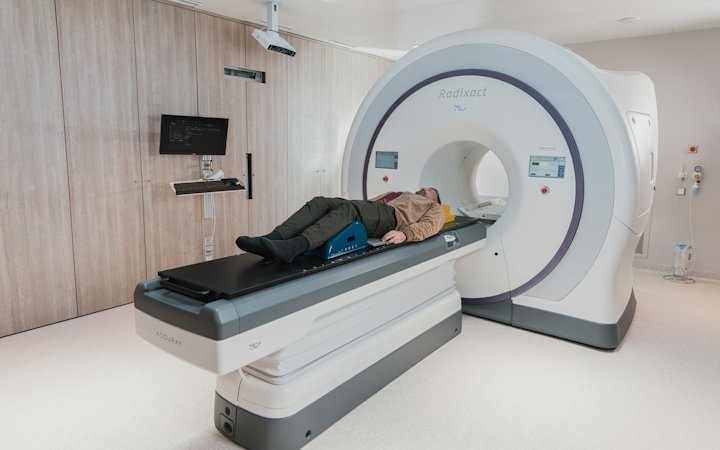
Almost always follows breast-conserving surgery and is sometimes used after mastectomy to reduce the chance of the cancer returning locally.
Drug treatments
- Hormone (endocrine) therapy – for hormone receptor-positive cancers, typically for 5 to 10 years.
- Chemotherapy – before surgery (neoadjuvant) or after it (adjuvant), depending on risk.
- Targeted therapy – such as anti-HER2 antibodies for HER2-positive disease or CDK4/6 inhibitors in selected cases.
- Immunotherapy – in some triple-negative breast cancers.
The right combination depends on stage, subtype, age, general health and your own preferences. Your care team will explain the reasoning behind each recommendation.
Treating metastatic breast cancer
When cancer has spread to other organs (stage IV), the aim of treatment is usually long-term control, symptom relief and maintaining quality of life. Doctors use successive lines of hormone, targeted and chemotherapy treatments, and newer targeted drugs where the tumour carries specific genetic changes – which is why molecular testing of the tumour is common in advanced disease. Many people live for years with metastatic breast cancer, with treatment adjusted as the disease changes.
Clinical trials
Clinical trials offer access to new medicines and approaches under close medical supervision. Ask your oncologist whether a suitable trial is available for your situation.
Reconstruction, recovery and life after treatment
After mastectomy, many women choose breast reconstruction using implants or their own tissue, either at the same operation or later. Reconstruction does not interfere with cancer follow-up. See breast reconstruction after mastectomy.
Once active treatment ends, follow-up begins: regular check-ups, yearly mammograms and attention to longer-term effects such as fatigue, arm swelling (lymphoedema), bone thinning on some hormone therapies, and emotional wellbeing. Staying active, keeping a healthy weight and limiting alcohol all have proven benefits. Read more in life after breast cancer treatment.
When to see a doctor – and treatment abroad
See your GP or a breast specialist promptly if you notice a new lump, a change in the skin or nipple, nipple discharge or swelling in the armpit. Do not wait to see whether it goes away – most changes are harmless, but only an examination can confirm that. If you are of screening age or have a family history, ask your doctor about a schedule of regular checks.
After a diagnosis it is entirely reasonable to ask for a second opinion, especially in complex cases or where more than one approach is possible. See getting a second medical opinion.
Many patients from Bulgaria and across Europe seek treatment at large accredited hospital groups in Istanbul, which have experienced breast surgeons, plastic surgeons and modern equipment. If you are considering treatment in Türkiye, check the hospital's accreditation and the surgeon's specialty, ask for a written treatment plan that explains each stage, and agree in advance how follow-up will continue at home. Health-tourism organisers such as New City Clinic in Istanbul coordinate the hospital, doctor, hotel, transfers and interpreter, but medical decisions are always made by the treating team after reviewing all your results.
Frequently asked questions
Can breast cancer be cured?
When found at an early stage, breast cancer can usually be treated successfully, and many women go on to live long, full lives. The outlook depends on the stage, tumour subtype and response to treatment. Even when the disease has spread, modern treatments can often keep it under control for a long time.
Is every breast lump cancer?
No. Most lumps are benign, such as cysts, fibroadenomas or changes linked to the menstrual cycle. Even so, any new lump should be checked by a doctor, because only tests can rule out cancer.
At what age should I start having mammograms?
European guidelines recommend screening every two years between 50 and 69, and many programmes now cover women from 45 to 74. If you have a strong family history or a known gene change, screening usually starts earlier. Your doctor can advise on a personal schedule.
Will I have to lose the whole breast?
Not necessarily. Many early breast cancers can be treated with breast-conserving surgery plus radiotherapy, with long-term results comparable to mastectomy. The choice depends on tumour size and position, genetics and your own wishes.
Can men get breast cancer?
Yes, although it is rare – roughly 1 in 100 cases. The most common sign is a painless lump behind the nipple. Men with a BRCA2 gene change have a higher risk and should discuss monitoring with a doctor.
Sources
This article is for education and does not replace consultation, diagnosis or treatment by a doctor. In an emergency call 112.