PET/CT scan: what it shows, how to prepare and when it is needed
A PET/CT scan combines two techniques in one: positron emission tomography (PET), which shows how actively cells are using energy, and computed tomography (CT), which provides a precise anatomical map. It is a key tool in cancer care for staging, assessing treatment and detecting recurrence, but it is not a routine screening test.
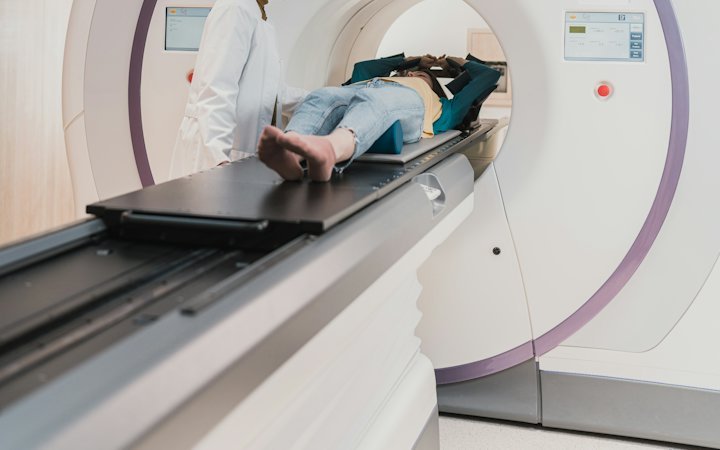
What is a PET/CT scan?
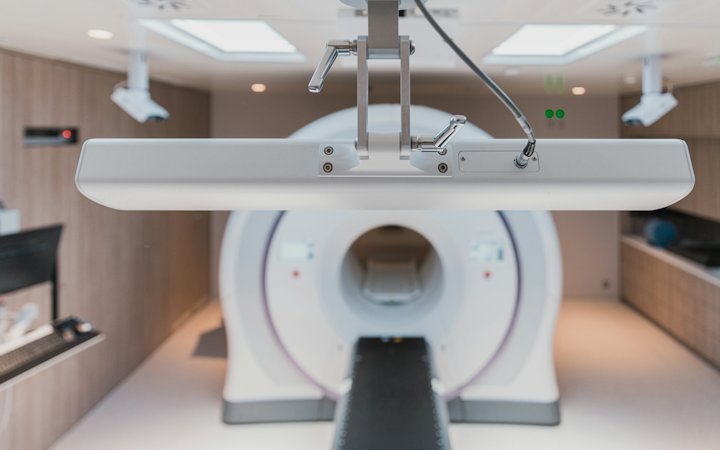
PET/CT is a hybrid nuclear medicine test. You receive a small amount of a radiotracer, a substance attached to a short-lived radioactive isotope, through a vein. Cells that take up more of it give off a stronger signal and appear as bright ("hypermetabolic") areas. A CT scan taken at the same time shows exactly which organ or lymph node the activity sits in.
PET/CT therefore answers not just "is there a lump?" but "how active is it?". Its main use is in cancer care, but it is also used in cardiology, neurology and to track down hidden inflammation. Our guide to diagnosis and tests explains where it fits among other investigations.
Types of tracer
| Tracer | What it shows | Main uses |
|---|---|---|
| FDG (fluorodeoxyglucose) | Glucose uptake | Lymphoma, lung cancer, bowel cancer, melanoma, head and neck and oesophageal cancer, and others |
| PSMA (gallium-68 or fluorine-18) | Prostate-specific membrane antigen | Prostate cancer: staging high-risk disease and rising PSA after treatment |
| DOTATATE / DOTATOC | Somatostatin receptors | Neuroendocrine tumours |
| Amyloid and tau tracers | Protein deposits in the brain | Clarifying dementia diagnoses in specialist centres |
| Others (e.g. FES, choline, fluciclovine) | Specific receptors or metabolism | Selected clinical situations |
The tracer is chosen according to the type of cancer. Some tumours, including certain slow-growing cancers and some kidney and prostate cancers, take up little FDG and can look "quiet" on a standard scan.
When is PET/CT used?
- Staging: working out how far a cancer has spread before treatment, for example in lymphoma, lung, oesophageal and head and neck cancers, and advanced breast cancer.
- Assessing response during or after chemotherapy, particularly in lymphoma.
- Suspected recurrence, for example when tumour markers rise but other scans are unclear.
- Finding the primary tumour when cancer has spread from an unknown source.
- Planning radiotherapy.
- Beyond cancer: heart muscle viability, locating an epilepsy focus, some dementias, inflamed blood vessels and fever of unknown origin.
The indication is set by your oncologist or tumour board in line with international guidance such as ESMO and EANM recommendations. PET/CT is not recommended as a screening test for people without symptoms.
How to prepare
Your centre will give exact instructions, but for an FDG PET/CT you will typically be asked to:
- Fast for 4–6 hours beforehand; water is allowed and encouraged.
- Avoid strenuous exercise for 24 hours, because working muscles absorb glucose and can confuse the picture.
- Have your blood sugar checked before the injection. If you have diabetes, you will receive specific advice about food and medicines such as insulin or tablets.
- Keep warm, since cold can activate "brown fat" which also takes up tracer.
- Bring previous imaging (CT, MRI, earlier PET/CT on disc) and your biopsy report.
- Tell staff if you are pregnant, breastfeeding or claustrophobic.
Preparation differs for PSMA and some other tracers, which may not require fasting.
What happens on the day
- A cannula is placed in a vein and your blood sugar is measured.
- The radiotracer is injected.
- You rest quietly for around 45–60 minutes while it spreads through the body. Lying still and not talking much helps.
- The scan itself usually takes 15–30 minutes on the scanner table.
Allow about 2–3 hours for the whole visit. The scan is painless. Sometimes a CT with iodine contrast is done in the same session.
Safety and radiation
PET/CT involves radiation from both the tracer and the CT component. The total dose is higher than for a single standard CT, so the test is only requested when the result will influence treatment decisions. The isotope has a short half-life (around 110 minutes for fluorine-18) and fades quickly.
Practical tips afterwards:
- drink plenty of water to help flush the tracer out in your urine;
- for a few hours, avoid prolonged close contact with pregnant women and young children;
- if you are breastfeeding, ask whether and for how long to pause;
- allergic reactions to the tracer are extremely rare.
Understanding your results
The report lists areas of increased uptake, usually with an SUV (standardised uptake value). A higher SUV often, but not always, indicates more active tissue. Bear in mind:
- False positives: inflammation, infection, recent surgery, radiotherapy or vaccination (armpit lymph nodes) can all light up.
- False negatives: very small deposits of a few millimetres, or low-activity tumours, may be missed.
- The brain, heart, kidneys and bladder normally take up FDG.
PET/CT therefore does not replace a biopsy; a suspicious finding often needs a tissue sample. Results should be discussed by your oncologist, ideally at a multidisciplinary tumour board, and you can always ask for a second opinion.
When to see a doctor
PET/CT is ordered by a specialist, usually once a diagnosis has been made or is strongly suspected. If you have cancer and are unsure whether a PET/CT would help, ask your oncologist. See a doctor promptly for unexplained weight loss, enlarged lymph nodes, persistent fever or night sweats; the first step in that case is basic tests, not PET/CT. After the scan, tell the team about any unusual symptoms at the injection site.
PET/CT abroad and in Türkiye
PET/CT capacity varies across Europe, and in some countries, including Bulgaria, there can be waits. Some patients have their scan at large accredited hospitals in Istanbul, where specialised tracers such as PSMA and DOTATATE are available, often alongside an oncology consultation. Before travelling, confirm that the tracer suits your situation, bring your biopsy report and previous scans, and ask for a written report and images in DICOM format. New City Clinic can organise the hospital, doctor, hotel, transfers and interpreter, and treatment decisions should also be discussed with your oncologist at home.
Frequently asked questions
How long does a PET/CT scan take?
The whole visit usually takes 2–3 hours, covering preparation, the injection, about an hour of rest and a 15–30 minute scan. The scan itself is painless.
Is PET/CT radiation dangerous?
The dose is higher than a standard CT, so the scan is only done when medically justified. The isotope decays quickly and drinking water helps clear it. The risk from a single scan is small compared with its value in planning treatment.
Can PET/CT detect every cancer?
No. Some cancers take up little FDG and very small deposits may be missed, while inflammation can also light up. That is why PET/CT is not a screening test and does not replace a biopsy.
Can I eat before a PET/CT?
For a standard FDG scan you usually need to fast for 4–6 hours, though water is allowed. Rules can differ for other tracers such as PSMA. Follow your centre's instructions.
What is a PSMA PET/CT?
It uses a tracer that binds to a protein on the surface of prostate cancer cells. It is used to stage high-risk prostate cancer and to locate disease when PSA rises after treatment, as it is more sensitive than conventional imaging.
Sources
This article is for education and does not replace consultation, diagnosis or treatment by a doctor. In an emergency call 112.