Kidney cancer: symptoms, diagnosis and modern treatment
Kidney cancer is increasingly found by chance, on an ultrasound or CT scan done for another reason. That is good news, because small tumours can usually be removed while keeping most of the kidney. Even in advanced disease, modern immunotherapy and targeted drugs have changed the outlook considerably.
What is kidney cancer?
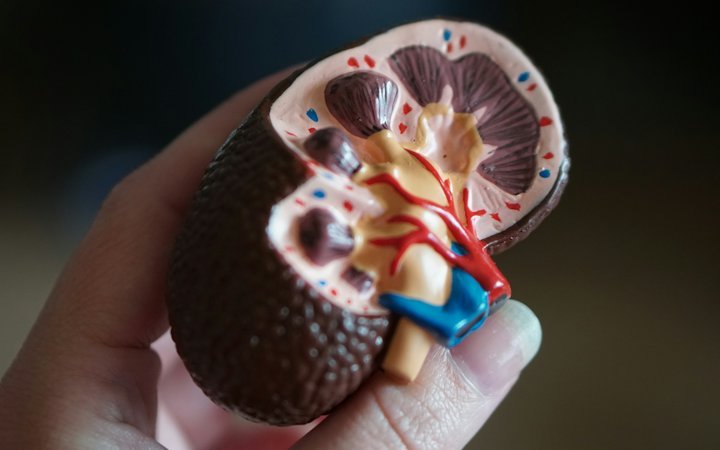
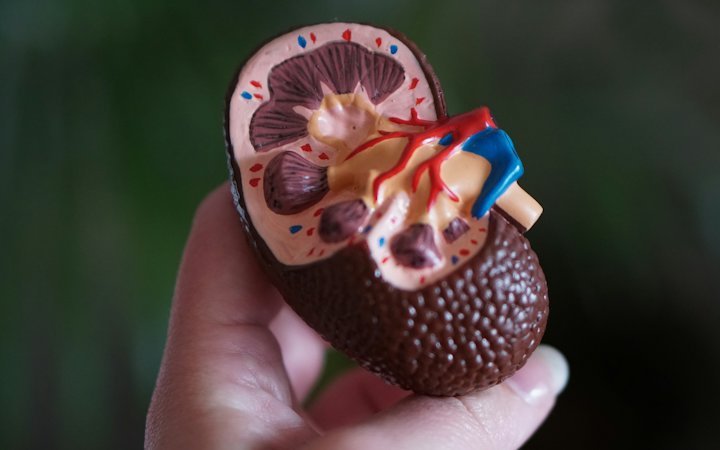
The kidneys are two bean-shaped organs either side of the spine that filter the blood and make urine. The most common kidney cancer in adults is renal cell carcinoma, which starts in the cells lining the tiny kidney tubules. Its subtypes include:
- clear cell – about 7 to 8 in 10 cases;
- papillary;
- chromophobe – usually with a more favourable course;
- rarer subtypes.
Cancers of the renal pelvis (urothelial carcinoma) are closer to bladder cancer in origin and treatment, and Wilms tumour affects children; both are considered separately. Not every kidney finding is cancer: simple cysts are very common and harmless, and some solid tumours, such as oncocytoma and angiomyolipoma, are benign.
Risk factors
- Smoking – roughly doubles the risk compared with non-smokers.
- Obesity – an important and increasingly common factor (see obesity).
- High blood pressure, regardless of treatment (see hypertension).
- Advanced kidney failure and long-term dialysis, which leads to multiple cysts in the kidneys (see chronic kidney disease).
- Male sex and age over 60.
- Inherited syndromes – von Hippel-Lindau disease, hereditary papillary renal carcinoma, Birt-Hogg-Dubé syndrome and others, often causing multiple tumours at a younger age.
- Workplace exposure to certain chemicals, such as trichloroethylene.
Kidney cancer symptoms
More than half of kidney cancers are now found by chance, before they cause symptoms. When symptoms occur, they may include:
- blood in the urine (haematuria) – pink, red or tea-coloured urine, often painless;
- a persistent dull ache in the side or lower back;
- a lump or swelling in the tummy;
- tiredness, anaemia, unexplained weight loss, fever without infection or night sweats;
- less often, swollen veins in the scrotum in men, high blood pressure or a raised calcium level.
The classic trio of blood in the urine, pain and a lump is now rare and usually points to more advanced disease.
Diagnosis and stages
The first test is often an abdominal ultrasound. If a solid mass or complex cyst is found, a contrast CT of the abdomen – and of the chest for staging – is performed; for some patients MRI is more suitable (see MRI and CT scans). Kidney function, blood count and calcium are also checked.
A biopsy is not always needed before surgery, because imaging is usually reliable. It is recommended for small tumours when surveillance or ablation is being considered, when another diagnosis is suspected, and before systemic treatment for metastatic disease. Unlike many other cancers, standard PET/CT plays only a limited role in renal cell carcinoma, and there is no reliable blood tumour marker.
| Stage | What it means |
|---|---|
| I | Tumour up to 7 cm, confined to the kidney |
| II | Larger than 7 cm, still confined to the kidney |
| III | Involves major veins, the fat around the kidney or nearby lymph nodes |
| IV | Beyond the kidney's outer layer, or spread to distant organs (lungs, bones, liver, brain) |
Treatment of kidney cancer
Treatment is planned by a urologist, oncologist and radiologist working together. Our guide to modern cancer treatment explains the general principles.
Small tumours (up to about 4 cm)
- Partial nephrectomy – removing only the tumour with a margin of healthy tissue and keeping the kidney. European urology guidelines prefer this whenever technically feasible, to protect kidney function. It is often done laparoscopically or with robotic surgery.
- Ablation (cryoablation or radiofrequency) – for older patients or those with other health problems.
- Active surveillance – for very small tumours in older or frailer patients, with regular scans.
Larger localised tumours
A radical nephrectomy removes the whole kidney, usually by keyhole surgery. People can live normally with one healthy kidney. For patients at high risk of recurrence, adjuvant immunotherapy for about a year may be discussed after surgery.
Metastatic kidney cancer
Renal cell carcinoma responds poorly to traditional chemotherapy, but it does respond to:
- immunotherapy combinations – two checkpoint inhibitors, or a checkpoint inhibitor with a targeted drug that blocks the tumour's blood supply (a VEGF tyrosine kinase inhibitor);
- targeted drugs on their own in later lines or for selected patients;
- local treatment – removing the kidney or isolated metastases, or stereotactic radiotherapy to spots in the bones or brain, in suitable cases.
Some patients with slow-growing disease and few symptoms may start with surveillance before systemic treatment. The choice depends on risk group, subtype and general health.
Life after treatment
Follow-up scans are scheduled according to the risk of recurrence. Protecting the remaining kidney tissue matters: control blood pressure and blood sugar, keep salt intake moderate, avoid regular use of anti-inflammatory painkillers (NSAIDs) without medical advice and have your creatinine checked regularly. Stopping smoking also lowers the risk of many other diseases.
When to see a doctor
See your GP if you notice blood in your urine – even once and without pain – or if you have persistent pain in your side or lower back, unexplained weight loss or a fever that will not go away. Your doctor will arrange a urine test and an ultrasound and refer you to a urologist if needed. If a scan done for another reason shows something in your kidney, make sure it is followed up.
Treatment abroad and in Türkiye
Some patients from Bulgaria and other European countries seek a second opinion or treatment at large accredited hospital groups in Istanbul, where robotic partial nephrectomy and modern systemic therapy are widely available. Ask the urologist about their experience with kidney-sparing surgery for tumours of your size and position, request a written plan, and agree how follow-up and, if needed, immunotherapy will be organised at home. Organisers such as New City Clinic coordinate the hospital, doctor, hotel, transfers and interpreter, while medical decisions remain with the treating team. See also second opinion and cancer treatment in Turkey.
Frequently asked questions
Is every kidney cyst dangerous?
No. Simple kidney cysts are very common and harmless. Complex cysts with walls, partitions or solid parts are graded using the Bosniak classification, and some need monitoring or surgery.
Can you live normally with one kidney?
Yes. One healthy kidney can usually do the work of two. Regular checks of blood pressure and kidney function are recommended.
Why remove only part of the kidney?
For small tumours, partial nephrectomy gives similar cancer outcomes to removing the whole kidney while preserving more kidney tissue. This lowers the risk of kidney failure and related heart and circulation problems.
Does chemotherapy work for kidney cancer?
Traditional chemotherapy has little effect on renal cell carcinoma. Advanced disease is treated with immunotherapy and targeted drugs, which are considerably more effective.
Is kidney cancer hereditary?
Usually not, but inherited syndromes such as von Hippel-Lindau disease exist. Genetic counselling is recommended for people diagnosed young, with multiple tumours or with a family history.
Sources
This article is for education and does not replace consultation, diagnosis or treatment by a doctor. In an emergency call 112.